Why Pakistani Businesses Keep Buying Bad Software (And How to Stop)
Why Pakistani Businesses Keep Buying Bad Software (And How to Stop)
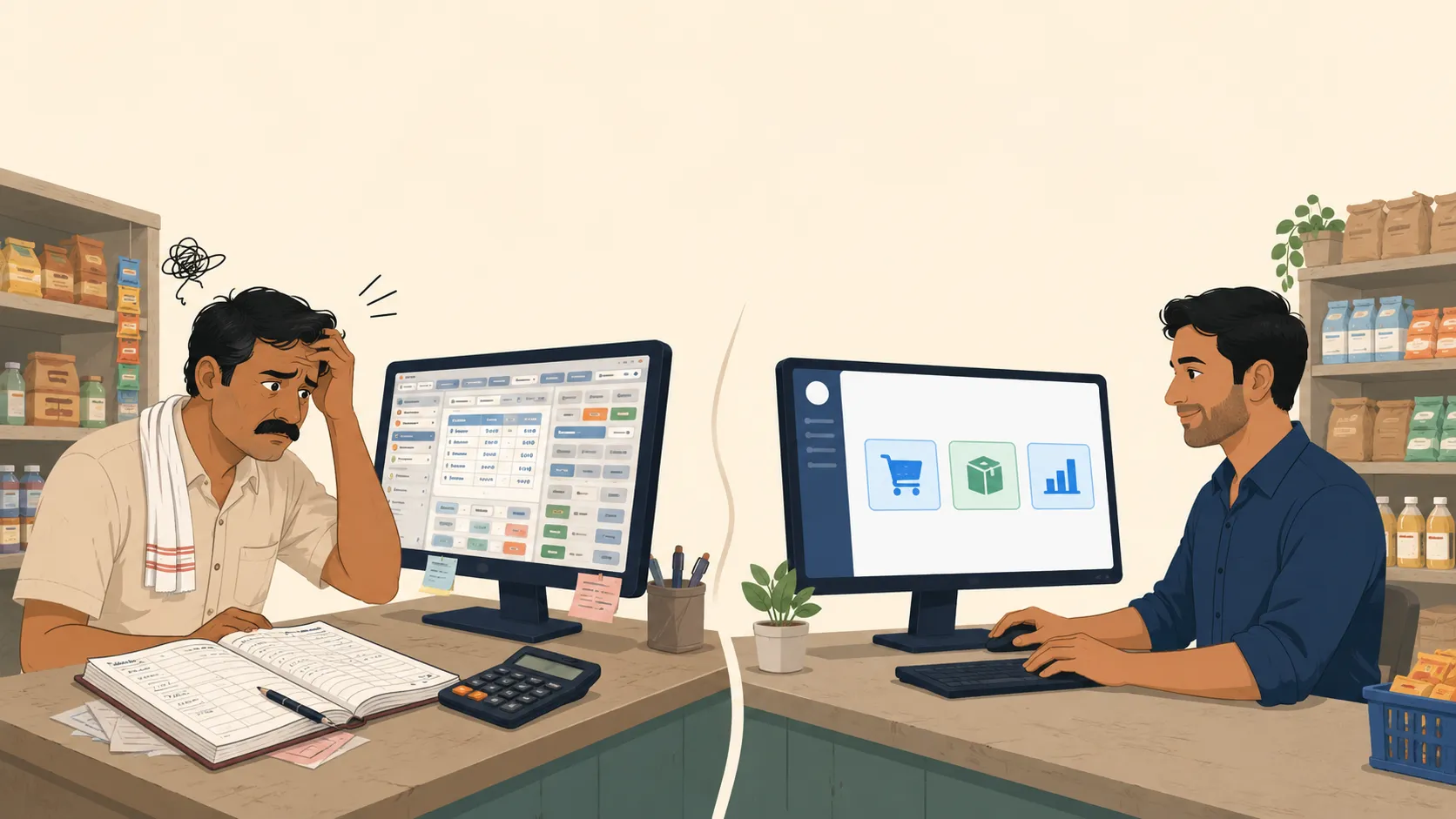
Ask a shopkeeper or factory owner in Pakistan what software they use and you will often hear the same story. They bought something because a salesman promised it was the best solution in the market. Six months later, half the features are unused, staff still keep a parallel register on paper, and the owner quietly goes back to WhatsApp and Excel.
The software did not fail because the business was not ready for technology. It failed because nobody in the buying process asked the most important question: is this actually easy to use?
The problem: we buy features, not usability
In Pakistan, software is sold like a menu. Vendors compete on who lists more features. POS, CRM, reports, AI, inventory, everything on one brochure. The buyer compares two lists, picks the longer one, and feels he made a smart decision.
But a feature list tells you nothing about the daily experience. A billing screen that takes eight taps for one sale will exhaust a cashier by noon. A report buried five menus deep will never be opened. A quotation form that only one trained employee understands means the business stops when he is on leave.
This is what UI and UX actually mean, and most buyers here have never been taught to look for it. UI is what the screens look like. UX is how the whole thing feels to use every day. Good UX is invisible. Your staff just get their work done without calling anyone for help. Bad UX shows up as workarounds, paper registers next to the computer, and "software wala" on speed dial.
Loud marketing is not proof of a good product
The local market is full of vendors calling themselves the number one solution, the best POS, the smartest system. Big claims are cheap. Anyone can run ads, cold call your customers, and promise the world in a demo where the salesman drives the mouse.
None of that tells you what the software feels like on a busy Tuesday when your least technical employee is using it alone. Aggressive selling and genuine quality are two different skills, and in our market the loudest seller often wins over the better builder. That only changes when buyers get smarter.
What Pakistani users actually want
After working with local businesses, the pattern is very consistent. Users here want:
Simplicity over options. One clear way to do a task beats five configurable ways. Most staff will never open settings.
Speed on real internet and real devices. Software that only runs smoothly on a new laptop with fiber internet is useless in half the country. It should work on modest machines and survive load shedding and patchy connections.
Urdu friendly, low reading interfaces. Icons, colors and obvious buttons matter more than long English labels. If a new employee cannot learn it in a day, it is too complicated.
Their actual workflow, not a foreign template. Udhaar, advances, custom orders, installment follow ups. If the software ignores how business really happens here, staff will route around it.
Support that answers. Not a ticket portal. A person who picks up the phone or replies on WhatsApp and fixes the issue.
How to evaluate software before you pay
A few simple tests will save you from most bad purchases:
- Make your staff drive the demo, not the salesman. Hand the mouse to your cashier or your quotation guy. If they struggle in the demo, they will struggle forever.
- Ask for a trial and use it for a real week. Any vendor confident in their product will allow this. Run actual sales or actual quotes through it.
- Count the taps. Time your most common task. A daily task that takes twice as long as your current method will be abandoned, no matter what else the software offers.
- Talk to two existing customers yourself. Not the references the vendor hands you. Find users in your own industry and ask what annoys them.
- Check who built it and why. Software built by people who understand your industry looks different from software built to tick boxes on a brochure. Ask the vendor to explain your workflow back to you. If they cannot, their product cannot either.
- Ask what happens to your data if you leave. A serious vendor lets you export your records. A trap keeps them hostage.
The bigger picture
Pakistan's businesses are digitizing fast, and that is good news. But the market only produces better software when buyers reward quality instead of noise. Every time a business chooses a product because it was genuinely easy to use, and walks away from one that was merely well advertised, the whole industry gets a signal.
You do not need to be technical to judge software. You just need to watch your own staff use it for ten minutes. Their faces will tell you everything the brochure will not.
Buy the software your team can actually use. Everything else is decoration.